
Moving to Central Florida? Davenport, Clermont & Kissimmee. What Nobody Tells You
The Quick Read
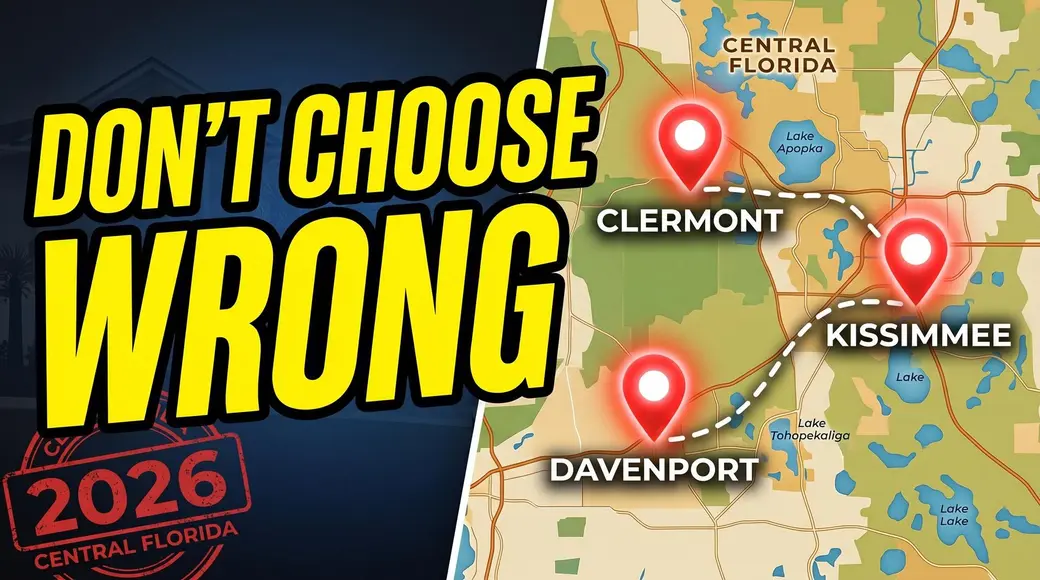
Finding the right home in Central Florida requires looking past the glossy marketing brochures and understanding the day-to-day realities of your chosen geographic location. While Davenport, Clermont, and Kissimmee might appear as neighboring suburbs on a map, each city demands a completely different set of compromises regarding commute times, monthly expenses, and neighborhood culture.
- Pricing Dynamics: Median single-family home values across these areas range between $400,000 and $450,000. Davenport typically provides the most aggressive price-per-square-foot for newer construction, while Clermont commands a premium for its topography and established residential feel.
-
Market Vibe: Davenport is characterized by amenity-rich master-planned communities that often share space with vacationers. Clermont leans into a tranquil, outdoor-centric lifestyle built around lakes and trails. Kissimmee is the most diverse, blending highly active resort corridors with quiet, established residential enclaves.
-
School Systems: Educational quality varies significantly by county. Lake County (Clermont) recently achieved its second consecutive "A" district rating. Both Osceola County (Kissimmee) and Polk County (Davenport) maintained strong "B" ratings, with Polk reaching a historic 87.7% traditional graduation rate.
-
Commute & Transportation: Orlando-area drivers lose an average of 68 hours annually to traffic. Davenport commuters must navigate the highly congested I-4 and US-27 corridors. Clermont relies heavily on State Road 50 and the Florida Turnpike. Kissimmee offers unparalleled access to Orlando International Airport (MCO) and the SunRail system.
-
Insurance & Hidden Costs: Florida property insurance premiums currently range from $2,330 to $3,645 annually. Buyers must aggressively evaluate roof age, wind mitigation status, and flood zones, while also budgeting for significant HOA and CDD (Community Development District) fees that are prevalent in newer Central Florida communities.
-
Professional Guidance: Navigating these micro-markets requires focus and persistence. Partnering with a media-powered real estate professional office ensures you have the data-driven insights necessary to secure a property that fits your true daily needs.
Moving successfully means matching your specific lifestyle routines from school drop-offs to highway accessibility with the unique infrastructure and community feel of the area you select.
What Does Your Tuesday Morning Look Like?
When evaluating a move to Central Florida, the most critical mistake buyers make is judging a city based on its weekend appeal rather than its weekday functionality. A peaceful Saturday drive through a sprawling master-planned community reveals very little about what your actual commute will look like at 7:30 AM on a Tuesday. The region is not a monolith. The experience of living in Polk County (Davenport), Lake County (Clermont), or Osceola County (Kissimmee) will drastically shape your stress levels, your vehicular dependency, and your overall quality of life.
Many people arrive with the expectation that "Central Florida" guarantees a ubiquitous sunny, laid-back lifestyle. While the weather remains a constant, the rhythm of your day is entirely dictated by your proximity to major arteries like Interstate 4, US Highway 27, US Highway 192, and State Road 50. A practical, informed move begins with mapping out five essential variables: your maximum commute tolerance, your exposure to daily traffic congestion, your desire for a quiet neighborhood versus a bustling hub, your tolerance for tourist crowds, and your weekend recreational preferences.
At our professional office, we prioritize focus and persistence. The process of finding the right home is a journey that requires tuning out the noise of flashy listing photos and zeroing in on the logistical realities of the neighborhood. A growing family will prioritize the logistics of school drop-offs and proximity to pediatricians. A single professional or frequent traveler will look closely at the drive time to Orlando International Airport (MCO), which handled nearly 58 million travelers recently. A retired couple might prioritize avoiding multi-story homes while securing immediate access to healthcare facilities and quiet walking paths. Identifying these non-negotiables early on is the foundation of a successful relocation.
| City / Area | Primary Vibe | Est. Median Price (2026) | Key Commute Route |
|---|---|---|---|
| Davenport | New Builds / Amenities | $385,000 | US-27 / I-4 |
| Clermont | Outdoors / Rolling Hills | $450,000+ | Hwy 50 / Turnpike |
| Kissimmee | Diverse / Airport Access | $415,000 | US-192 / Toll 417 |
Davenport: The Epicenter of Expanding Value and Amenities
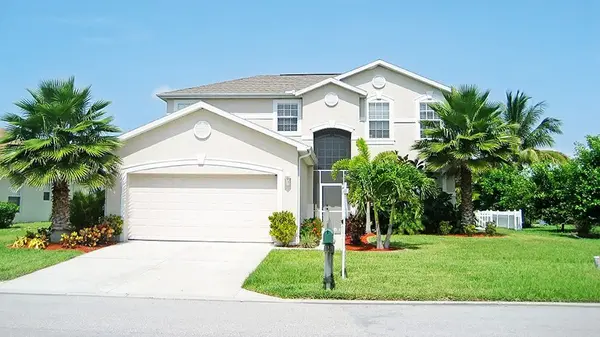
If your primary objective is to secure the largest, newest home with the most extensive resort-style amenities for your budget, Davenport stands out as the logical choice. Situated primarily in Polk County, Davenport has rapidly transitioned from expansive citrus groves into a hub of new residential developments. It is the epicenter of expanding residential construction in the region.
The True Cost of Square Footage
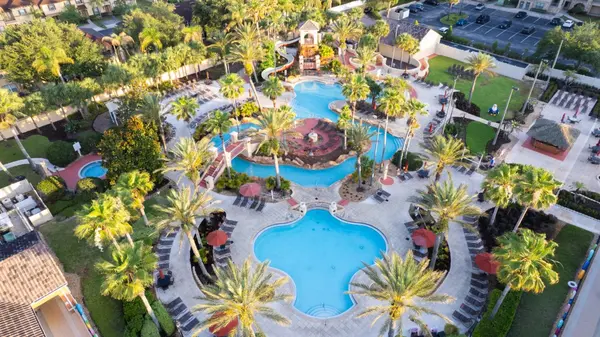
As of 2026, the median single-family home price in Davenport hovers around $385,000, with a highly competitive price per square foot averaging $177 to $178. This presents a substantial opportunity for families and individuals who prioritize modern floor plans, energy-efficient building materials, and expansive community features like resort pools, splash pads, and fitness centers. The value proposition here is undeniable when compared to the tighter inventory and higher price points found closer to downtown Orlando.
However, that value is directly tied to the area's infrastructure challenges. Davenport sits directly on the critical US-27 corridor and butts up against Interstate 4. This location makes it highly susceptible to immense traffic volume, particularly during the peak winter tourist season and daily rush hours. The intersection of I-4 and US-27, often a focal point near the Posner Park shopping center, is notorious for congestion. A commute that takes 20 minutes in July could easily stretch to 45 minutes in February.
The Short-Term Rental Dynamic
One of the most defining characteristics of Davenport is the sheer density of short-term vacation rentals (STRs). Communities like Solterra Resort, ChampionsGate (which straddles the county line), and Providence Golf Club offer spectacular amenities, but buyers must be acutely aware of the zoning. In many of these subdivisions, you may find that the majority of the homes on your street are occupied by rotating vacationers rather than full-time residents.
This dynamic completely alters the neighborhood environment. A street dominated by vacation rentals will see higher weekend traffic, frequent large gatherings, and a constantly changing cast of neighbors. For an investor, this is the goal. For a family looking for long-term neighborhood stability, block parties, and a quiet Tuesday night, this can be a jarring reality. It is imperative to maintain focus and persistence when reviewing Homeowners Association (HOA) documents to understand the rental restrictions before making an offer.
Clermont: The Premium on Space, Elevation, and Tranquility
Heading west into Lake County introduces a dramatic shift in both topography and lifestyle. Clermont is widely known as the "Choice of Champions" and is famous for its rolling hills a rarity in Florida and its extensive network of lakes. Clermont is designed for buyers who crave physical space, natural scenery, and a pace of life that feels intentionally disconnected from the frenetic energy of the theme park corridors.
A Lifestyle Investment
The housing market in Clermont reflects its desirability as a peaceful retreat. Median home values here sit comfortably in the mid-to-upper $400,000s, often stretching well into the $500,000s and beyond for homes with lake access or larger lots. When you purchase a property in Clermont, you are paying a premium for the environment outside your front door. You are investing in proximity to Waterfront Park on Lake Minneola, the paved stretches of the South Lake Trail for cycling and running, and the vast 4,500-acre expanse of Lake Louisa State Park.
Clermont feels established. It attracts families looking for room to breathe and retirees who want an active, outdoor-centric lifestyle without the pressure of tourist traffic. The neighborhoods tend to feature larger setbacks, mature landscaping, and a stronger sense of permanent community compared to the transient nature of the resort corridors to the south.
The Commute Compromise
The trade-off for this tranquility is logistical. Clermont’s primary east-west artery is State Road 50 (West Colonial Drive), with north-south movement largely dependent on US Highway 27 and access to the Florida Turnpike. If your professional life requires a daily commute into downtown Orlando or the eastern employment hubs, living in Clermont particularly the northern or western edges will result in a substantial daily drive.
Furthermore, the micro-location within Clermont matters immensely. The southern edge of Clermont, often bordering the rapidly expanding Four Corners area, provides faster access to Disney and the tourist zones, but at the cost of heavier traffic. The northern corridors offer a more traditional suburban feel but add miles to an Orlando commute. You must map your specific routes to work, to the grocery store, to the pediatrician during peak hours to truly understand the Clermont compromise.
Kissimmee: The Hub of Variety and Immediate Access
Kissimmee, the seat of Osceola County, is the most heterogeneous of the three cities. Its identity is inextricably linked to the tourism industry, given its immediate proximity to Walt Disney World and Universal Studios, but it also contains vast tracts of established, quiet residential neighborhoods that feel entirely disconnected from the vacation crowds.
Unmatched Proximity and Options
The greatest advantage of Kissimmee is access. If you travel frequently for work or leisure, the ability to reach Orlando International Airport (MCO) via the 417 Toll Road or the SunRail station in downtown Kissimmee is an invaluable asset. If you thrive on being near entertainment, diverse dining options, and major retail centers, Kissimmee places you in the center of the action.
Housing in Kissimmee covers every conceivable category. You can find low-maintenance townhomes starting in the mid-$300s, sprawling mid-century block homes near historic downtown Kissimmee and Lake Tohopekaliga (Lake Toho), and massive six-bedroom estate homes in gated, resort-style communities ranging from $500,000 to over $750,000.
The Neighborhood-Level Research Requirement
Because Kissimmee is so vast and diverse, city-level data is almost useless. You must drill down to the specific zip code and subdivision. The US-192 (Irlo Bronson Memorial Highway) corridor is dense, heavily trafficked, and dominated by commercial tourism. Living immediately adjacent to this corridor means dealing with tourists 365 days a year.
However, if you look toward areas like the NeoCity technology district, or the neighborhoods stretching south toward St. Cloud along Narcoossee Road, the environment changes drastically to a more traditional, stable suburban feel. Kissimmee rewards buyers who exhibit intense focus and persistence in their neighborhood-level research. A street that appears idyllic in a February listing photo might be overwhelmed by overflow parking from a nearby resort during the peak summer months.
Central Florida Median Price Comparison (Est. 2026)

The Unseen Financial Realities: Taxes, Insurance, and Fees
The most jarring experience for out-of-state buyers relocating to Central Florida is often the realization of what it actually costs to carry a home month-to-month. The purchase price is merely the starting line. A mortgage calculator that only factors in principal and interest will leave you dangerously underprepared for the reality of Florida homeownership.
Navigating the Florida Insurance Market
Property insurance remains the most volatile and critical financial component of buying a home in Florida in 2026. Premiums have seen significant adjustments, and buyers should expect annual costs to range anywhere from $2,330 to over $3,645, depending on the specific risk profile of the property.
Insurance companies are intensely focused on roof age. If you are looking at a home in Kissimmee or Clermont with a roof older than 10 to 15 years, you may find it difficult to secure affordable coverage, or you may be required to replace the roof as a condition of the policy. A comprehensive Wind Mitigation Inspection is no longer optional; it is a mandatory step to secure crucial discounts on your premium by proving the home has features like hurricane clips and impact-resistant fixtures. Furthermore, even if the property is located miles inland, localized flood zones exist throughout Polk, Lake, and Osceola counties. Understanding your flood risk and the potential need for separate flood insurance is paramount before executing an offer.
HOAs and CDDs: The Price of Amenities
In Davenport and the newer sections of Kissimmee and Clermont, Community Development District (CDD) fees and Homeowners Association (HOA) dues are standard. A CDD is a localized government framework utilized by developers to finance the initial infrastructure of a community roads, sewer lines, clubhouses, and pools. This cost is passed down to the homeowner as an assessment on the annual property tax bill, and it can add hundreds or even thousands of dollars to your yearly tax burden.
HOA fees, paid monthly or quarterly, cover the ongoing maintenance of those amenities. When you tour a stunning new build in Davenport with a resort-style lazy river, a state-of-the-art fitness center, and meticulously manicured common areas, you must calculate exactly how much those features will cost you every month, regardless of whether you actually use them. Furthermore, HOAs enforce strict covenants and restrictions. They will dictate what color you can paint your house, whether you can park a commercial vehicle in your driveway, and whether you are allowed to build a fence. You are buying into a governed community, and you must read the fine print with persistence.
Education Demographics: Evaluating Schools Beyond the State Grade
For families relocating to Central Florida, the school district is often the primary driver of the neighborhood search. It is crucial to understand that school quality is not uniform across a city, and school zoning lines can be highly irregular and subject to change as populations expand.
In the 2025-2026 academic year, the local districts presented distinctly different profiles:
-
Lake County Schools (Clermont area): The district achieved a historic milestone by securing an "A" rating from the Florida Department of Education for the second consecutive year. Lake County boasts an impressive 96% graduation rate, with strong performances from institutions like East Ridge High School and Lake Minneola High.
-
Polk County Public Schools (Davenport area): Polk County maintained a solid "B" grade for the year. The district has implemented highly successful intensive progress monitoring systems, resulting in a historic 87.7% graduation rate for traditional high schools.
-
Osceola County School District (Kissimmee area): Osceola County also maintained a strong "B" grade, missing an "A" rating by a microscopic margin. The district is known for its diverse student body and robust college readiness and magnet programs.
While state grades provide a baseline, they do not tell the whole story. A school might boast exceptional test scores, but if the physical logistics of the daily drop-off line require you to sit in a queue for 45 minutes every morning, the quality of the education might be overshadowed by the daily logistical nightmare. When evaluating schools, you must verify the exact zoning for the specific address (never assume based on the subdivision across the street), investigate available magnet or charter programs, and physically drive the route during school hours.
Pros
- ✔Exceptional square footage value
- ✔Extensive community amenities
- ✔Proximity to major highways
Cons
- ✖Heavy seasonal traffic on US-27
- ✖High concentration of short-term rentals
- ✖Substantial CDD and HOA fees
Expanding on the Central Florida Relocation Knowledge Base
To ensure you have a truly comprehensive understanding of the market, let's explore the deeper, nuanced questions that buyers must navigate during their relocation journey.
How Does the Homestead Exemption Work in Florida, and Why Does it Matter?
The Florida Homestead Exemption is a vital financial tool for permanent residents. If you purchase a home in Davenport, Clermont, or Kissimmee and establish it as your primary residence by January 1st of the tax year, you can qualify for this exemption. It reduces the taxable value of your property by up to $50,000, which significantly lowers your annual property tax bill. More importantly, it triggers the "Save Our Homes" cap, which limits the annual increase in the assessed value of your home to a maximum of 3% (or the change in the Consumer Price Index, whichever is lower). This cap provides profound long-term protection against sudden, drastic spikes in property taxes as the Central Florida market continues to expand.
What is the Real Difference Between a CDD and an HOA?
While both involve paying for community upkeep, they function differently. A Homeowners Association (HOA) is a private organization that manages the daily operations, rules, and maintenance of a neighborhood (like lawn care, minor repairs to gates, and enforcing aesthetic standards). You pay the HOA directly on a monthly or quarterly basis. A Community Development District (CDD) is a local, special-purpose government framework established to issue tax-free municipal bonds. These bonds pay for the heavy, initial infrastructure the actual construction of the roads, the water management systems, and the grand clubhouses. You pay the CDD assessment annually as part of your county property tax bill. A home can have an HOA, a CDD, both, or neither.
How Can I Verify if a Neighborhood is Dominated by Short-Term Rentals?
To determine if a Davenport or Kissimmee neighborhood is primarily vacation homes, you must go beyond asking the listing agent. First, review the HOA's Declaration of Covenants, Conditions, and Restrictions (CC&Rs). Look specifically for clauses regarding "minimum lease terms." If the HOA allows leases of less than 30 days, it is legally a short-term rental community. Second, look at the local county property appraiser's website to see where the tax bills are being mailed. If a large percentage of the tax bills for the street are mailed to out-of-state addresses or LLCs, it is a strong indicator of high investor ownership and transient occupancy.
What is the "Ten-Minute Filter" for Buying a Home?
The ten-minute filter is a strategic exercise we use in our professional office to force buyers to confront their non-negotiables before stepping foot in a property. You take ten minutes to write down absolute deal-breakers. Examples include: "Must be within a 30-minute drive of MCO," "Cannot be located in a community that permits short-term rentals," "Must be zoned for a specific high school," or "HOA and CDD fees combined cannot exceed $400 per month." By applying this filter rigidly to online listings, you eliminate the emotional trap of falling in love with a beautiful kitchen in a house that will ultimately make your daily life miserable due to traffic or hidden costs.
Why Do Central Florida Commutes Fluctuate So Drastically?
The volatility of the Central Florida commute is tied to a lack of robust public transit alternatives and a heavy reliance on a few major arteries. Interstate 4 (I-4) is the spine of the region. Because there are limited parallel routes, a single accident on I-4 can cause miles of gridlock that rapidly spills over onto secondary roads like US-27 and US-192. Furthermore, the massive influx of seasonal tourists and "snowbirds" (winter residents) means that the volume of cars on the road in February is drastically higher than in September. When calculating your commute from Clermont or Davenport, you must factor in this seasonal elasticity and the high probability of corridor failure.
💡 Broker Tip
Don't skip the test drive. Before writing an offer in any of these cities, drive the specific route from the house to your workplace, your preferred grocery store, and the school drop-off line during peak weekday hours (7:30 AM and 5:00 PM). A neighborhood that feels perfect on a Sunday afternoon can reveal a stressful logistical reality on a Tuesday morning. Our professional office relies on this level of focus and persistence to ensure your long-term satisfaction.
Lifestyle & Community: Engaging with Local Entities
True community integration goes beyond the property line. To understand the pulse of Central Florida, you must engage with the local events and entities that define the culture. Here are three highly anticipated local community happenings that showcase the distinct flavor of the region:
-
The Davenport Back to School Bash at Posner Park (July 2026): Scheduled for July 25, 2026, this community-centric event highlights the expanding family demographic in Polk County. Hosted near the major retail hub of Posner Park, it brings together local businesses, school district representatives, and families for a day of preparation and community building. It serves as a perfect microcosm of Davenport’s family-friendly, growth-oriented environment.
-
The Clermont Pig on the Pond Community Festival: Held annually at the picturesque Waterfront Park on Lake Minneola, this massive event is a cornerstone of the Clermont calendar. It features barbecue competitions, carnival rides, live music, and fireworks. More than just entertainment, it raises funds for local educational scholarships, perfectly encapsulating Clermont's focus on outdoor living and tight-knit community support.
-
Downtown Kissimmee Historic Art & Farmer’s Market: Taking place in the heart of historic downtown Kissimmee near Lake Toho, this recurring event strips away the tourist veneer to reveal the authentic, established soul of Osceola County. It highlights local artisans, regional agriculture, and historical preservation, offering a sharp contrast to the theme park corridors just a few miles away.
Local Favorites: Where to Eat & What to Do
The best way to understand a neighborhood is to eat where the locals eat and relax where they relax. When you visit these areas, step away from the chain restaurants and experience the authentic culinary and recreational landscape.
-
The Authentic Puerto Rican Experience: Central Florida has a rich, vibrant Hispanic culture. You absolutely must seek out local spots serving traditional Puerto Rican food. These local restaurants and food trucks offer an unmatched, authentic culinary experience that defines the region's diverse identity.
-
A Taste of Europe in the Suburbs: For a sit-down experience, bypass the crowded resort restaurants and find the hidden gems serving traditional authentic Italian food or rich Spanish Paella. The area is also home to several phenomenal local Steak Houses that provide high-end dining without the theme park premium.
-
Recreation Beyond the Parks: In Clermont, spend an afternoon cycling the South Lake Trail or kayaking the pristine waters of Lake Louisa State Park. In Kissimmee, take a walking tour of the Lake Tohopekaliga (Lake Toho) lakefront, which is world-renowned for its bass fishing and scenic walking paths.
Frequently Asked Questions
Local insights for Davenport, Clermont, and Kissimmee.
What are the pros and cons of living in Davenport Florida?
+ What are the pros and cons of living in Davenport Florida?
Pros include exceptional value for square footage, access to expansive new-construction homes, and highly amenitized master-planned communities. Cons center around severe traffic congestion along the I-4 and US-27 corridors, rapid infrastructure growing pains, and the pervasive presence of short-term vacation rentals that can disrupt traditional neighborhood stability.
Is Clermont a good place to live in Florida?
+ Is Clermont a good place to live in Florida?
Clermont is an outstanding place for those who prioritize a tranquil, outdoor-oriented lifestyle. It offers unique rolling hills, extensive lakefront parks, and the South Lake Trail. The main drawback is the required commute; living in Clermont often necessitates a longer drive to reach downtown Orlando or major employment centers.
Is moving to Kissimmee, Florida worth it?
+ Is moving to Kissimmee, Florida worth it?
Moving to Kissimmee is highly worthwhile if you desire immediate proximity to world-class entertainment, diverse housing options, and rapid access to Orlando International Airport. However, it requires intense neighborhood-level research, as the environment can shift rapidly from quiet residential streets to heavily congested tourist corridors.
How much are HOA fees typically in Central Florida?
+ How much are HOA fees typically in Central Florida?
HOA fees vary based on amenities. In older neighborhoods, fees might be $50 to $100 annually for basic maintenance. In newer, resort-style communities in Davenport or Kissimmee featuring clubhouses, guarded gates, and extensive pools, fees frequently range from $200 to over $450 per month.
Do I need flood insurance if I live in Central Florida?
+ Do I need flood insurance if I live in Central Florida?
Yes, you should strongly consider flood insurance. Standard homeowners policies do not cover flooding. Due to Florida's flat topography, intense summer storms, and complex lake systems, localized flooding is a legitimate risk. Always verify the specific FEMA flood zone designation before purchasing.
How do property taxes work for new construction in Florida?
+ How do property taxes work for new construction in Florida?
For new construction, the initial tax bill is often based only on the unimproved land value. In the second year, the county appraiser reassesses the property to include the completed structure, causing taxes to increase significantly. Buyers must budget for the fully assessed value immediately.
Resources
To further refine your Central Florida relocation strategy, utilize these resources and data points to guide your decision-making process.
Recommended Reading:
-
Investment Opportunities: Why Davenport’s Real Estate Market Is Booming
-
Is Clermont, Florida Worth Moving To in 2026? A Complete Relocation Guide
External Market Authorities:
Categories
Recent Posts




"My job is to find and attract mastery-based agents to the office, protect the culture, and make sure everyone is happy! "
49503 Hwy 27 Suite B, Davenport, Fl 33897, United States